Wednesday, August 26, 2026
LIVE
Kremlin confirms CIA director's Moscow visit for intelligence talks///Dubai airport passenger traffic falls 31 per cent in first half///Hormuz shipping stays a third below normal despite corridor talks///Iran and Oman plan temporary corridor through the Strait of Hormuz///Israel occupies East Jerusalem UNRWA centre for a second day///Settlement expansion encircles Jenin in the northern West Bank///Netanyahu says no deal is possible with Iran's rulers///Xi Jinping to attend SCO summit in Kyrgyzstan and visit Egypt///France and Saudi Arabia put Lebanon at the centre of their joint statement///How Turkey is calculating its response to Israeli escalation in Syria///Israeli Authorities Charge Settler with Manslaughter over Death of Palestinian Activist///United Nations Report Documents Deliberate Attacks on Civilians in Myanmar///Kremlin confirms CIA director's Moscow visit for intelligence talks///Dubai airport passenger traffic falls 31 per cent in first half///Hormuz shipping stays a third below normal despite corridor talks///Iran and Oman plan temporary corridor through the Strait of Hormuz///Israel occupies East Jerusalem UNRWA centre for a second day///Settlement expansion encircles Jenin in the northern West Bank///Netanyahu says no deal is possible with Iran's rulers///Xi Jinping to attend SCO summit in Kyrgyzstan and visit Egypt///France and Saudi Arabia put Lebanon at the centre of their joint statement///How Turkey is calculating its response to Israeli escalation in Syria///Israeli Authorities Charge Settler with Manslaughter over Death of Palestinian Activist///United Nations Report Documents Deliberate Attacks on Civilians in Myanmar///
Subscribe
The Levant
Independent · Digital
The Levant Herald

Dubai airport passenger traffic falls 31 per cent in first half

The Iran war disrupted travel across the Gulf, with DXB handling 13 million passengers in the second quarter.
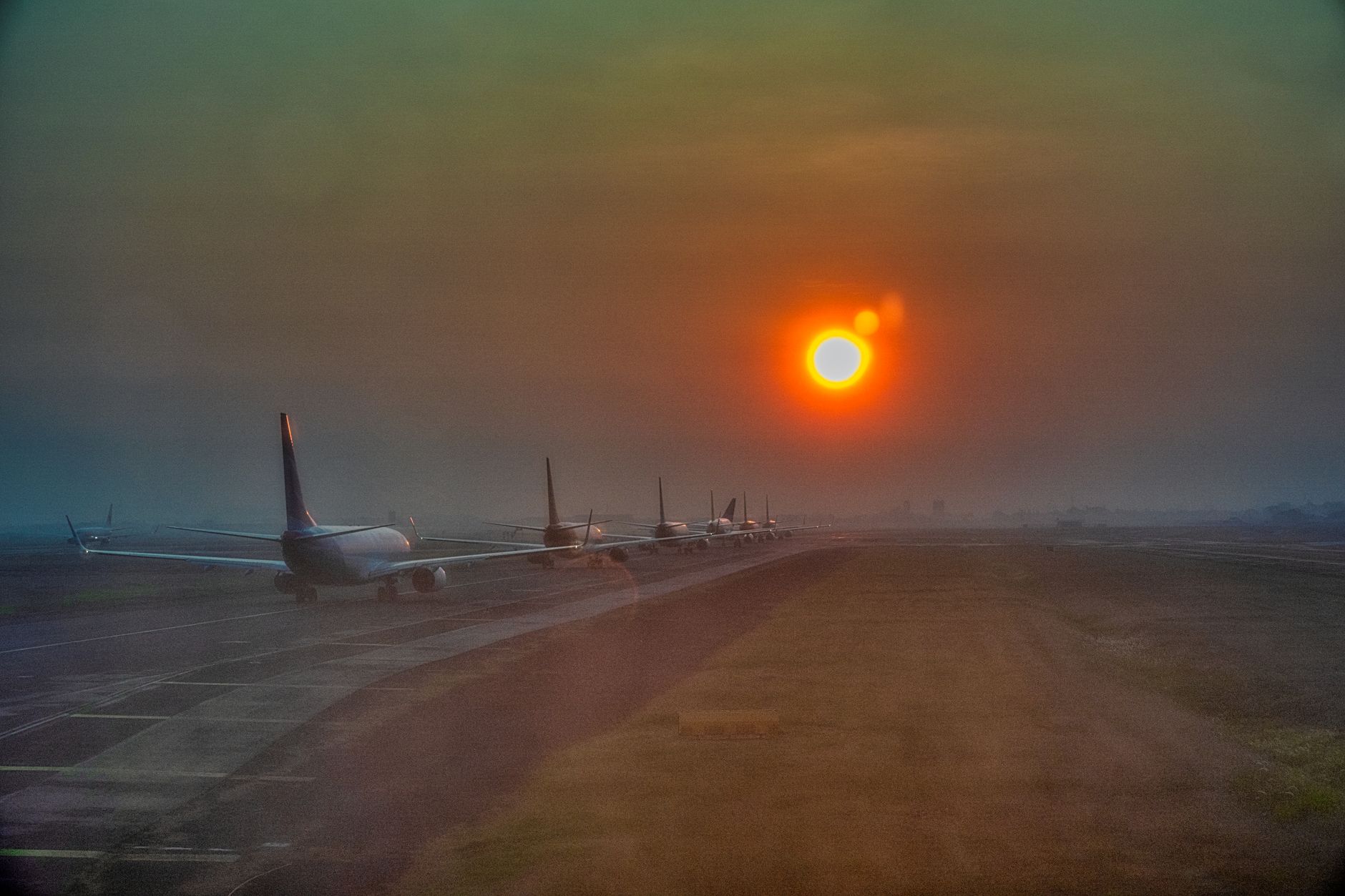
Silhouette of airplanes lined up on the runway at sunset in Banten, Indonesia.
Silhouette of airplanes lined up on the runway at sunset in Banten, Indonesia. Photo by Tom Fisk on Pexels

Dubai International Airport recorded a 31.3 per cent fall in passenger traffic in the first half of the year, its operator said, as the Iran war disrupted travel across the Gulf.

The airport handled 13 million passengers between April and June. Management said it expected stronger momentum in the second half as airlines restore route networks and transit traffic recovers, describing the conflict as having tested every part of the aviation system.

A decline of that magnitude at a hub of this scale reflects structural disruption rather than softer demand. Airspace closures across the region force longer routings, which increase fuel burn and crew duty times and can push a route below the threshold at which it covers its costs. Carriers respond by suspending frequencies, and connecting itineraries are the first to disappear.

Dubai International Airport recorded a 31.3 per cent fall in passenger traffic in the first half of the year, its operator said, as the Iran war disrupted travel across the Gulf.
Leila Toufic · The Levant Herald

That matters disproportionately for Dubai, whose model depends on passengers whose journeys begin and end elsewhere. A hub is exposed to conditions across its entire network, not only to those at home.

Recovery therefore requires airlines to rebuild schedules with enough confidence to sell seats months in advance, which in turn depends on the predictability of regional airspace. The announced Iran-Oman corridor through the Strait of Hormuz is relevant here well beyond its effect on oil, since the same assessment of regional risk governs both.

Advertisement

Based on reporting by Al-Monitor.

AI transparency. This article was produced with the assistance of artificial intelligence and published under human editorial oversight. AI systems can make mistakes. Read how we use AI (EU AI Act, Art. 50).
Related Stories